Charging and range
310 km1, charged where you live.
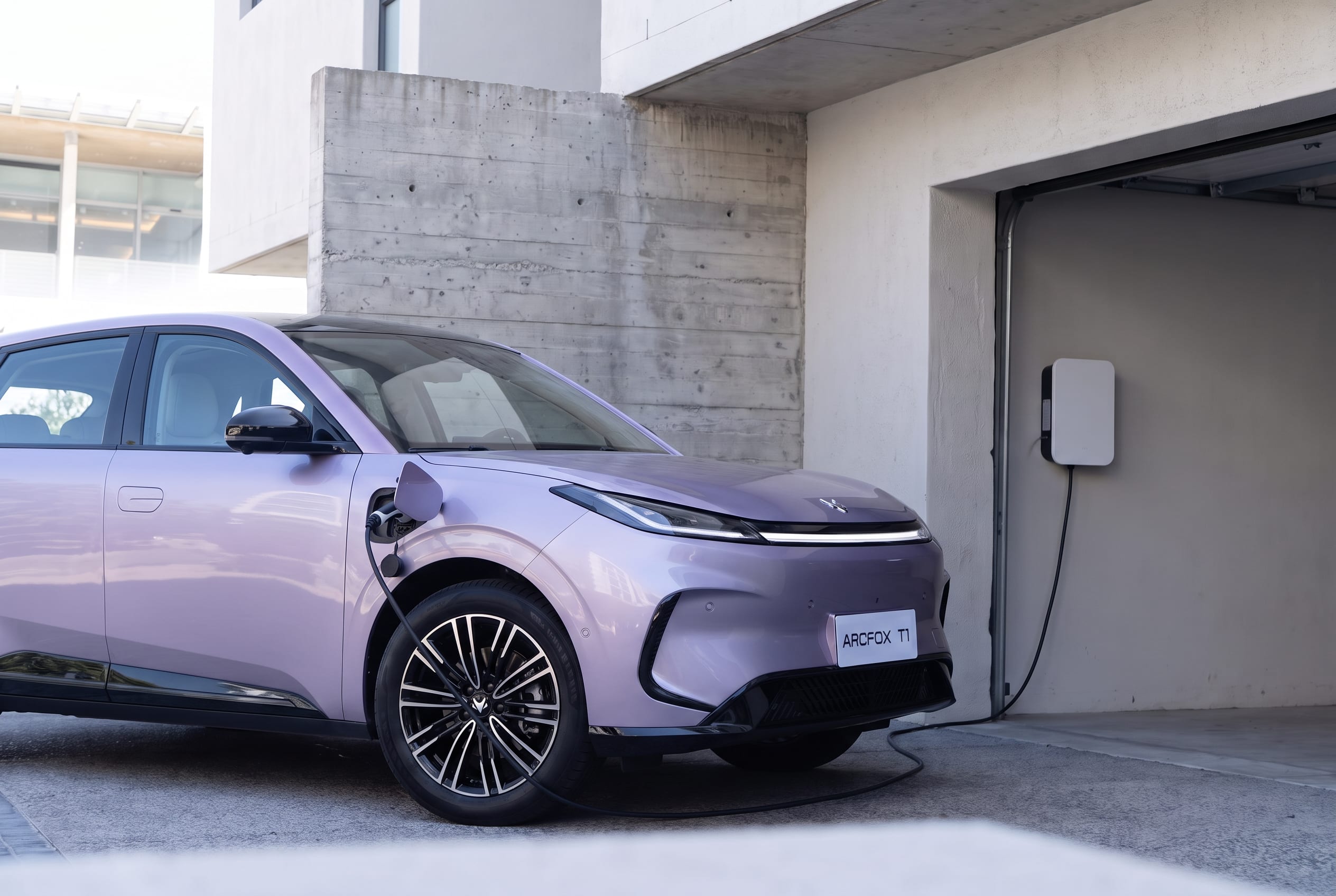
Most charging happens at home, overnight. For longer trips, DC fast chargers on the national routes top you up in about the time it takes to stop for coffee.
Range
Where 310 km gets you.
Approximate road distances from your city, against the T1’s WLTP range. Real-world range is lower, so plan a charging stop on longer trips.
Distances from Johannesburg
- PretoriaAbout 60 kmWithin range
- RustenburgAbout 120 kmWithin range
- PolokwaneAbout 320 kmPlan a charging stop
- MbombelaAbout 330 kmPlan a charging stop
- BloemfonteinAbout 400 kmPlan a charging stop
- DurbanAbout 570 kmPlan a charging stop
- GqeberhaAbout 1,050 kmPlan a charging stop
- Cape TownAbout 1,400 kmPlan a charging stop
The blue line marks 310 km, the T1’s WLTP range1. Distances are approximate.
What affects range
The same car, different days.
Like a fuel car’s consumption, an electric car’s range changes with how and where you drive.
Speed
Highway speeds use more energy than town driving.
Temperature
Cold mornings and hard-working air conditioning both reduce range.
Load and hills
Passengers, luggage and long climbs add to the energy you use.
Driving style
Smooth driving and regenerative braking recover energy as you slow down.
At home
Plug in at night. Leave full.
Home charging is the cheapest and easiest way to charge.
- Choose a wall boxThe T1 charges at up to 7 kW on AC, so a 7 kW wall box gets the most from it. Your dealer can advise.
- Have it installedAn accredited electrician fits it and checks your home’s supply.
- Plug in overnight0–100% takes about 8 hours on a 7 kW wall box, so you wake up to a charged car.
What a charge costs
T1 PRO and T1 MAX · 42.3 kWh battery
- Full charge, 0–100%
- R127
- Top-up, 30–80%
- R63
An estimate from the battery’s capacity and your rate. Check your rate on your municipal or Eskom bill. Charging losses add a little.
On the road
30–80% in about 25 minutes.
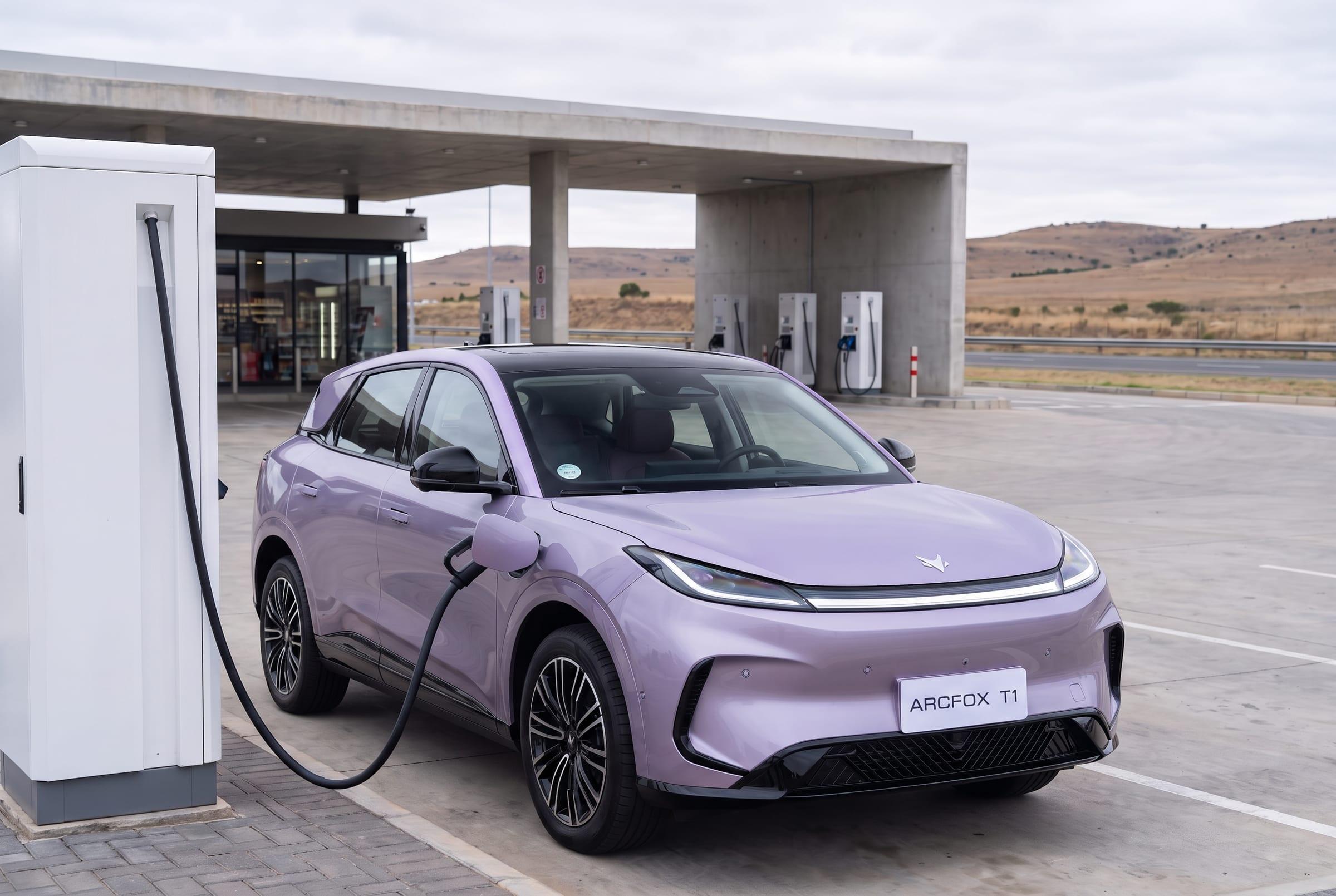
On a DC fast charger, the T1 adds enough range for the next leg in about the time it takes to stop for coffee. Fast chargers are found along the main national routes and at many shopping centres.
- DC fast charging, 30–80%1
- About 25 min
- Charging connector
- Ask your dealer
Battery care
An LFP battery is easy to live with.
The T1 uses a lithium iron phosphate (LFP) battery. LFP batteries are generally comfortable being charged to 100% regularly. Follow the guidance in your owner’s manual.
- Charge at home when you canSlower AC charging is gentle on the battery and costs the least.
- Use fast chargers for tripsFast charging is made for road trips and is normal use.
- Don’t leave it emptyAvoid parking for long periods with the battery nearly flat.
Questions
Charging, answered.
How long does it take to charge at home?
The T1 charges at up to 7 kW on AC. On a 7 kW wall box, 0–100% takes about 8 hours, so most owners simply plug in overnight. A lower-powered supply takes longer.
Can I use any public charger?
The T1 charges on AC chargers and DC fast chargers. Your ARCFOX dealer can show you the charging port and cable on a test drive.
Does fast charging damage the battery?
Occasional fast charging on trips is normal use. For everyday charging, home AC charging is gentler and cheaper.
What happens to range in cold weather?
Range is lower on cold days, especially with the heating on. Planning a little extra margin in winter is sensible.
What does WLTP mean?
The Worldwide Harmonised Light Vehicle Test Procedure, the standard used for the T1’s published 310 km range. Real-world range depends on speed, temperature, load and driving style.
See it for yourself.
Book a test drive or find your nearest ARCFOX dealer. The T1 is from R359,900.